The Silent Sentinel: Your Home’s Foundation
Imagine building a Lego tower. The first few bricks you place on the table determine how stable your final structure will be. If those base bricks are uneven or loose, your tower will eventually tilt and crumble. This, in a very simple analogy, is how your home’s foundation works. It’s the sturdy base that holds up the walls, roof, and everything inside, including your family and memories. This crucial support system is often built into the ground, and just like with Lego bricks, any problem down there will affect the entire house above. In fact, a healthy foundation can last for generations, protecting your home through rain, snow, and everything in between. But sometimes, things can go wrong below the surface, and that’s when understanding foundation repair becomes important.
What Causes Foundation Issues?
So, why do foundations start having problems in the first place? Here are a few common causes:
- Soil Shifting and Movement: The ground your home sits on is more dynamic than you might think. Soil is made of different materials, and some are very sensitive to changes in moisture. When it’s very dry, the soil (especially clay) can shrink and create gaps under the foundation. When it rains heavily, the soil expands, which can push upwards and put immense pressure on the concrete. This constant cycle of shrinking and swelling can cause uneven movement and cracks.
- Improper Drainage: Where does the water go when it rains on your roof and yard? If water is allowed to puddle around your home’s foundation, it can saturate the soil and lead to problems. This can include anything from leaky pipes under the house to clogged gutters and downspouts that pour water right next to the foundation wall. Proper drainage is key to directing water away from your home.
- Poor Soil Quality or Compaction: Sometimes the issue lies in how the ground was prepared before the house was built. If the soil wasn’t properly compacted or if the composition is simply unstable, the foundation may settle unevenly over time as it struggles to bear the weight of the structure.
Simple Steps to Help Protect Your Foundation
While not every foundation issue can be prevented, there are a few simple things you can do to keep your home’s base in good shape:
- Manage Water Flow: Ensure gutters and downspouts are clean and extend far enough away from the foundation (at least 3 to 4 feet is recommended). This directs the heavy flow of rainwater away from the area around your foundation.
- Grade Your Yard: Look at the land around your house. Does it slope away from the foundation, or does it cause water to flow towards it? Grading your yard so that it has a gentle slope moving away from the house helps to natural direct surface water elsewhere.
- Be Mindful of Landscaping: Think about what you plant near your home. Large shrubs and trees can have significant root systems that affect soil moisture. Planting them at a safe distance can help prevent future issues.
- Maintain Consistent Moisture: During very dry periods, it can be helpful to lightly water the soil around your foundation. This prevents extreme soil shrinkage and helps maintain stability. A simple soaker hose can be a great tool for this.
- little prevention goes a long way. By keeping these simple tips in mind, you can help protect your home from some of the most common causes of foundation issues.
Repairing Your Home’s Base
If you’ve identified a foundation problem and are ready to explore your options, you’ll be happy to know that modern foundation repair techniques are advanced and effective. Here are a few common approaches:
- Manage Water Flow: Ensure gutters and downspouts are clean and extend far enough away from the foundation (at least 3 to 4 feet is recommended). This directs the heavy flow of rainwater away from the area around your foundation.
- Grade Your Yard: Look at the land around your house. Does it slope away from the foundation, or does it cause water to flow towards it? Grading your yard so that it has a gentle slope moving away from the house helps to natural direct surface water elsewhere.
- Be Mindful of Landscaping: Think about what you plant near your home. Large shrubs and trees can have significant root systems that affect soil moisture. Planting them at a safe distance can help prevent future issues.
- Maintain Consistent Moisture: During very dry periods, it can be helpful to lightly water the soil around your foundation. This prevents extreme soil shrinkage and helps maintain stability. A simple soaker hose can be a great tool for this.
A little prevention goes a long way. By keeping these simple tips in mind, you can help protect your home from some of the most common causes of foundation issues.
Repairing Your Home’s Base
If you’ve identified a foundation problem and are ready to explore your options, you’ll be happy to know that modern foundation repair techniques are advanced and effective. Here are a few common approaches:
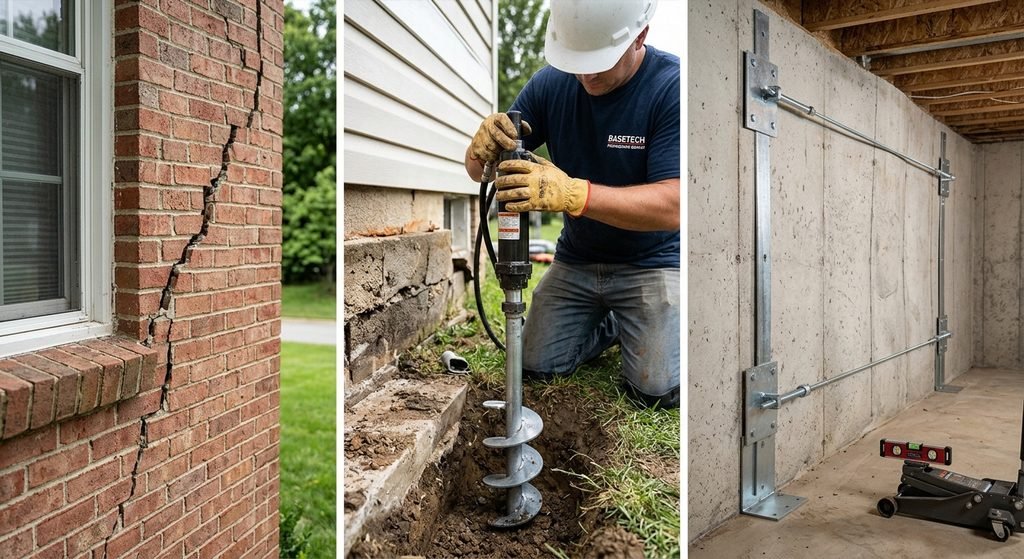
- Piers (Push and Helical): This involves installing sturdy, metal or concrete columns deep into the ground. These columns are designed to provide additional support by transferring the weight of the home to stronger soil or bedrock. Think of them like adding stronger legs to a table. There are different types of piers (like push piers and helical piers) for different situations, and a professional can recommend the best option for your home.
- Crack Repair: For minor cracks, professionals can often use specialized materials (like epoxy or polyurethane foam) to fill and seal them. This helps prevent water from seeping into the cracks and causing further damage. It’s like applying a special adhesive to keep everything together.
- Underpinning: This is a method that strengthens the foundation from below. It can involve adding material, increasing the depth of the foundation, or distributing the load of the building over a larger area. This helps stabilize the structure and prevent further settling.
The best repair plan is tailored to the specific issues your foundation is facing and the underlying cause. A qualified professional will perform a thorough inspection and guide you through the process, from diagnosis to successful repair, helping you keep your home safe and sound for years to come.