The August 2016 flood showed how much water the Baton Rouge area can take on in a short time. Even in an ordinary year, heavy rain and saturated ground put steady stress on foundations. This guide explains how water affects a house, what to look for after a storm, and how to protect the foundation. It is not a complete flood-recovery guide, so follow local officials for safety and cleanup rules.
How Water Moves a Foundation
- Swelling and shrinking soil: clay-rich soil expands as it soaks up water and shrinks as it dries, and that cycle can lift and drop parts of a house unevenly.
- Washout: running water can carry soil out from under slabs, walks and footings, leaving voids that let concrete settle.
- Pressure on walls: saturated soil pushes against foundation and crawl space walls.
- Wet wood and piers: in raised homes, long-term dampness can rot wood and let piers sink or lean.
- Uneven drying: after a flood, one side of the house may dry faster than another, and that can open new cracks.
Signs to Look For After Heavy Rain or a Flood
- New or widening cracks in brick, drywall or slab
- Doors and windows that start sticking
- Gaps between walls and ceilings, or around door frames
- Standing water or soggy soil near the foundation, or water in the crawl space
- Soil that has washed away from beside the foundation
- A musty smell that does not go away
What to Do First
- Put safety first. Do not enter a house that local officials or an inspector say is unsafe, and keep electricity and gas off until they are checked.
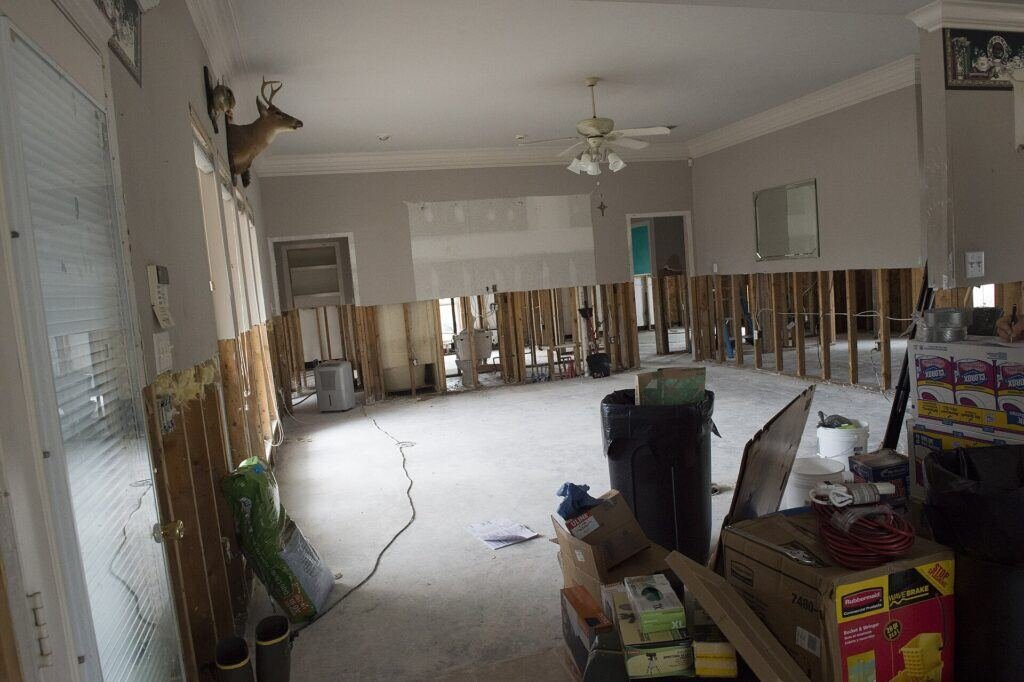
- Document the damage. Take dated photos and videos before anything is moved or removed.
- Let the structure dry out gradually. Moisture needs time to leave the soil and the wood, and rushed patching can hide changes.
- Watch cracks. Mark and date them so a professional can see if they are growing.
- Check permit rules. The City of Baton Rouge’s flood recovery information sheet lists structural changes among work that needs a permit, so confirm before repairs begin.
Insurance and Water Damage
Standard homeowners policies exclude flood, and flood policies exclude earth movement. That means foundation settling after a flood may not be covered even when the flood caused it. Read the details in our guide on homeowners insurance and foundation repair.
How to Protect Your Foundation From Water
- Keep gutters clear and extend downspouts well away from the house.
- Make sure soil around the foundation slopes away from the walls.
- Fix low spots where water collects, and consider a French drain where needed. See foundation drainage solutions.
- Keep soil moisture fairly steady in dry spells, rather than letting it bake and crack.
- In a raised home, check the crawl space for standing water and add a vapor barrier if moisture is a problem. See crawl space repair.
Baton Rouge Homes and the Wet-Dry Cycle
Heavy storms are only part of the story. Around Baton Rouge the ground often goes from soaked to baked within a few months, and clay soil moves each time. A house can survive many cycles and then show cracks after one unusually wet spring or a hot, dry summer. That is why consistent drainage and steady soil moisture matter more than any single storm.
Get Ready Before the Next Storm
- Clean gutters and check that downspouts empty well away from the foundation.
- Walk the yard after a heavy rain and note where water collects.
- Photograph the house and any existing cracks so you have a baseline.
- Know where your shutoffs are and keep your insurance papers handy.
- Keep a short list of inspectors, drainage contractors and plumbers you can call.
When to Get a Professional Opinion
Get an inspection if cracks keep growing, floors begin to slope, the crawl space stays wet or you simply are not sure. A professional can tell you whether the changes are cosmetic or structural, and your documentation of what the house looked like before and after the water will make that conversation easier.
Seeing any of this at home? Request a free estimate and a local foundation repair contractor can take a look.
Sources and Further Reading
- City of Baton Rouge Permit and Inspection: flood damage information sheet
- FEMA flood insurance appeal decision C28: earth movement exclusion
Written by the Greet Bless editorial team and last reviewed October 2026. This is general information, not engineering, legal, insurance or financial advice. Greet Bless is a referral service and does not inspect homes or perform repairs.